The Land Bank’s Greening & Adaptive Reuse program turns abandoned properties into useful green space for the community.
With state funding, the Land Bank has removed many unsafe and abandoned houses. After removing structures, we remove debris and clean up the area, and then plant grass or clover, as well as trees and/or wildflowers, when applicable. This helps neighborhoods look better, feel safer and become more enjoyable places to live.
These projects have helped raise nearby property values, lower the costs of dealing with blight and reduce the chance of future foreclosures by improving neighborhood conditions.
From Demolition to Opportunity
From 2014 to 2019, the Land Bank received funding to tear down unsafe buildings through state programs. More than $14 million was used to remove old structures and improve the land.
Since 2012, over 2,000 buildings have been demolished across Mahoning County. This has created many open lots that can be reused in new and helpful ways.
Many of these lots have become small parks or open green spaces designed for neighborhood use. They have hosted pop-up parks, farmers markets, community events, children’s activities, and small libraries that help bring neighbors together.
Community-Driven Reuse
The Land Bank works with neighborhood groups to decide how each space should be used. Local landscaping companies help design and build these spaces, keeping jobs and money in the community.
Projects have included community gardens, Little Free Libraries, bus shelters, school-area parks, and other features that serve local residents.
Project Spotlight: WRTA Bus Shelter | Youngstown
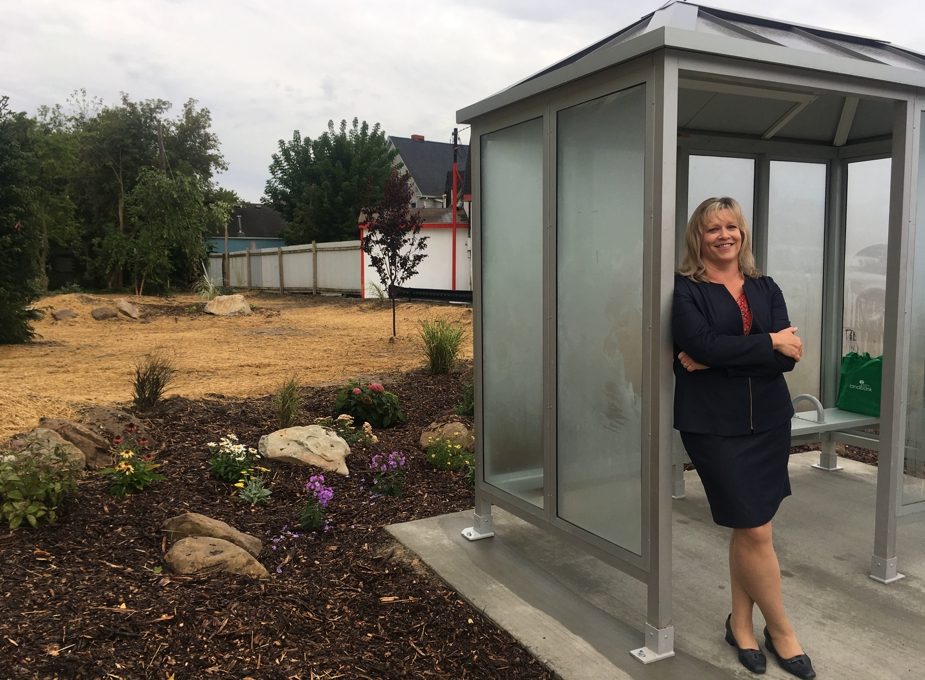
In 2019, the Land Bank received a Beautification Award for its greening projects, including the establishment of a new bus shelter on Mahoning Avenue in Youngstown. The shelter, pictured above with Executive Director Debora Flora, replaced a run-down house that had been demolished, turning a problem site into a useful space for the community.
Community Partnerships
Strong partnerships help make the Greening & Adaptive Reuse program successful.
The Land Bank works with Youngstown CityScape to grow native plants in a greenhouse and move them to Land Bank sites. These plants help local wildlife and support long-term environmental health.
The Land Bank also works with Mill Creek MetroParks to plant native species that support pollination and restore natural habitats. Check out the video demonstration below with Land Bank Project Coordinator Gary Davenport and Rachel Sobnosky of Mill Creek MetroParks.
Other partners include the Mahoning Soil and Water Conservation District, Ohio State University Extension, Eastgate Regional Council of Governments and the Rotary Club of Youngstown. Together, they support projects like Operation Pollination and other beautification efforts.